
STYLE CONCEPT DENTISTRY






Endodontics in Bologna: root canal treatment | Marenco Dental Clinic
Endodontics is the branch of dentistry concerned with the diagnosis and treatment of conditions affecting the tissues inside the tooth.
When the dental pulp becomes inflamed or infected, endodontic treatment may be necessary, with the aim of preserving the natural tooth.
At Marenco Dental Clinic in Bologna, treatment is planned according to the condition of the tooth, the symptoms and the individual needs of the patient.
"The aim of endodontic treatment is to control infection and preserve the natural tooth wherever possible."
What is endodontics?
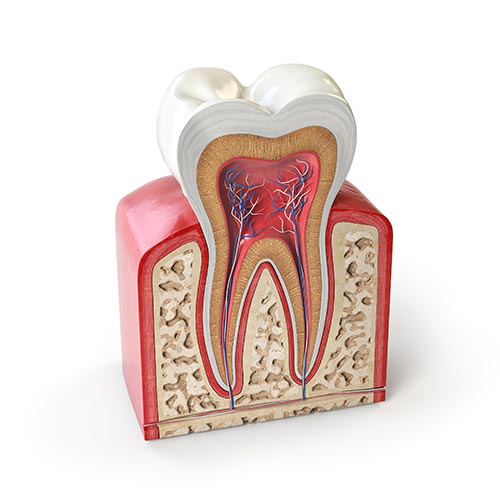
The dental pulp is a tissue containing blood vessels and nerves. It is located inside the tooth and extends into the root canals.
Deep decay, trauma and other conditions can cause irreversible inflammation or infection of the pulp. In these cases, endodontic treatment, commonly known as root canal treatment, may be recommended.
The aim is to remove the affected tissue, clean and disinfect the root canals, and seal them to help control the infection.
The dental pulp and root canals
The dental pulp contains blood vessels and nerves and plays an important role in tooth development. It also contributes to the tooth's sensory response. When the pulp is severely damaged or infected, treatment may be needed inside the tooth without removing the tooth itself.
The long-term preservation of the tooth also depends on the condition of the surrounding tissues, the amount of remaining tooth structure and the quality of the final restoration.
When is root canal treatment necessary?
Not every decayed or painful tooth requires root canal treatment. The need for treatment is determined by the dentist following a clinical examination and any necessary radiographic investigations.
Root canal treatment may be recommended when the dental pulp is irreversibly damaged or infected and can no longer be maintained in a healthy, vital state.
Deep decay and inflammation of the dental pulp
Deep decay can reach the dental pulp and cause inflammation. Pain may occur spontaneously, persist over time or become more pronounced in response to hot or cold stimuli. In some cases, however, symptoms may be mild or absent.
Trauma can also damage the pulp without causing immediate symptoms. A dental assessment helps identify the problem and determine the most appropriate treatment.
Infection and changes in the tissues around the root
When an infection spreads to the tissues around the root apex, symptoms may include pain when chewing, swelling or an abscess. In other cases, the lesion may be identified during a radiographic examination.
Depending on the diagnosis, the dentist may recommend initial root canal treatment, root canal retreatment or, in selected cases, a surgical procedure.
How is root canal treatment carried out?
The procedure and its duration vary depending on the tooth being treated, the complexity of the root canals and the clinical circumstances. Treatment is carried out under local anaesthesia to control pain during the procedure.
Diagnosis and assessment of the tooth
The dentist examines the tooth, gathers information about the symptoms and determines which investigations are needed to confirm the diagnosis and plan the treatment.
Cleaning, disinfection and sealing of the root canals
Once access to the pulp chamber has been established, the dentist removes the affected tissue, cleans and shapes the root canals. The dentist then disinfects the canals and fills them with appropriate materials to help seal them and prevent further infection.
The procedure can be more complex when the canals are numerous, curved or difficult to access.
Restoring and protecting the treated tooth
Following root canal treatment, the tooth needs to be restored to recover its function and strength. The most appropriate solution depends on the amount of remaining tooth structure, the position of the tooth and the forces it needs to withstand during chewing.
A direct restoration may be sufficient, or a more extensive restoration may be recommended. Follow-up appointments also help maintain the result over time.
Preserving natural teeth, from reconstruction to restorative solutions.
Restorative dentistry includes treatments to repair teeth damaged by decay, trauma or wear.
When the dental pulp is also affected, root canal treatment may need to be combined with restoration of the tooth.
 Discover restorative dentistry in Bologna →
Root canal retreatment: when may it be necessary?
In some cases, a tooth that has already undergone root canal treatment may require further treatment, even after a considerable period of time. This may happen when an infection persists or returns, or when the tissues around the root do not heal as expected. Several factors may contribute to this, including the complex anatomy of the root canals.
Following a thorough clinical and radiographic assessment, the dentist may recommend root canal retreatment to clean, disinfect and seal the canals again.
Endodontics and the preservation of natural teeth
Where the clinical circumstances allow, endodontic treatment can help control infection and preserve the natural tooth, potentially avoiding extraction.
Appropriate restoration, daily oral hygiene and regular dental check-ups are also important for maintaining the tooth's function over time.
Endodontics at Marenco Dental Clinic in Bologna
Every treatment begins with an individual assessment to identify the most appropriate course of care.
At Marenco Dental Clinic, diagnosis, root canal treatment and restoration are considered as connected stages of care. Treatment options are discussed with the patient, explaining the findings and any limitations of the proposed treatment.
Find out more about surgical procedures for conditions affecting the oral cavity.
If an infection persists despite root canal treatment or retreatment, a surgical procedure such as an apicectomy may be considered in selected cases.
Whether surgery is appropriate depends on the diagnosis and the condition of the tooth.
Find out more about oral surgery in Bologna →
Frequently asked questions about endodontics (FAQ)
Is root canal treatment painful?
Treatment is carried out under local anaesthesia to control pain during the procedure. Temporary sensitivity may occur after the appointment, with the intensity and duration varying according to the clinical circumstances.
If pain is severe or persists, you should contact your dentist.
When does a tooth need root canal treatment?
Root canal treatment may be recommended when the dental pulp is severely inflamed or infected and can no longer be maintained in a healthy, vital state.
The decision is made following a clinical assessment and any necessary investigations. Tooth decay or dental pain does not automatically mean that root canal treatment is required.
How long does root canal treatment take?
The duration depends on the tooth being treated, the number and complexity of its root canals, and whether there is an infection or any previous treatment.
Some cases can be completed in a single appointment, while others may require several visits.
Can a root-treated tooth last for many years?
Yes. A tooth that has undergone root canal treatment can remain functional for many years.
Its longevity also depends on the amount of remaining tooth structure, the quality of the restoration, oral hygiene and regular dental check-ups.
What happens if root canal treatment does not resolve the infection?
A further clinical and radiographic assessment is needed to understand the cause.
Depending on the circumstances, the dentist may consider root canal retreatment, a surgical procedure such as an apicectomy, or other treatment options.
The choice depends on the condition of the tooth and whether it can be preserved.
Do you need an endodontic assessment?
If you have toothache or have been advised to undergo root canal treatment, a dental examination can help clarify the cause of the problem and identify the most appropriate treatment.
If you have toothache or have been advised to undergo root canal treatment, contact Marenco Dental Clinic for further information or to arrange an appointment.
tel. +39 051 563825 / email reservation@andreamarenco.it
WELCOME TO OUR HOME

Via Della Barca 27, Bologna - Tel: +39 051 563825
Follow us on social media


We use cookies to improve your experience. See our Privacy and Cookie Policy .